
Just as a good foundation is important for building a strong house, choosing the right acoustic guitar is crucial for your musical journey. In this guide, I’ll walk you through the important factors to consider when selecting your first acoustic guitar to ensure you start on the right note. You’ll learn about size, wood materials, and price ranges, as well as tips on avoiding the common pitfalls that can turn beginners away from their passion. By the end, you’ll have the information you need to make an informed decision and enjoy your musical experience!
Key Takeaways:
- Choice of Guitar: Selecting the right acoustic guitar is crucial; beginners should consider size, playability, and budget when making a decision.
- Basic Techniques: Mastering fundamental skills such as strumming, fingerpicking, and chord transitions is vital for building a strong foundation.
- Practice Routine: Consistent practice is key; beginners should establish a regular schedule to progressively improve their playing ability.
Understanding Acoustic Guitars
Acoustic guitars are a popular choice for beginners due to their natural sound and ease of use. They come in various styles and sizes that cater to different musical preferences and playing levels. In this section, I’ll provide an overview that includes the history, types, anatomy, and differences compared to electric guitars.
History of Acoustic Guitars
To appreciate acoustic guitars, understanding their history is crucial. They trace their origins back to ancient stringed instruments such as the lute and the oud. Over centuries, these instruments evolved into the modern acoustic guitar design we know today, with significant developments occurring during the 19th century in Spain and America.
Types of Acoustic Guitars
To find the right acoustic guitar, it’s crucial to know the different types available. Here are some common types:
| Flat-top | Most common style, versatile for various genres. |
| Classical | Uses nylon strings, ideal for fingerstyle playing. |
| Jazz | Typically hollow-bodied for a warmer tone. |
| 12-string | Offers a richer sound with double strings. |
| Travel | Compact design for portability without sacrificing tone. |
- Flat-top guitars are the most popular.
- Classical guitars have nylon strings.
- Jazz guitars are suited for warm tones.
- 12-string guitars create a rich sound.
- Travel guitars are easy to carry.
Assume that you choose the type that aligns with your musical goals and playing style.
Anatomy of an Acoustic Guitar
Acoustic guitars consist of several parts that all play a vital role in sound production. Key components include the body, neck, and fretboard, all working together to create the beautiful tones you enjoy.
Anatomy of an acoustic guitar includes various crucial parts, such as the soundboard, which amplifies the sound, and the bridge, where the strings are anchored. The neck houses the fretboard, which allows you to play different notes. Each component contributes to the instrument’s overall sound quality.
Differences Between Acoustic and Electric Guitars
Acoustic guitars differ significantly from electric guitars in design and function. Acoustic guitars rely solely on their body to generate sound without the need for electronic amplification.
Guitars produce sound through their hollow body, making them ideal for natural acoustics. In contrast, electric guitars utilize pickups and amplifiers, resulting in a different sound quality and playing technique. The choice between acoustic and electric depends on your musical preference and style of play.
While both types have their advantages, it’s important for you to consider what you want to achieve musically. Acoustic guitars offer a more traditional sound, while electric guitars can provide a broader range of effects and versatility.
Choosing the Right Acoustic Guitar
Now, when it comes to selecting your first acoustic guitar, it’s vital to understand what will work best for you and your playing style.
Factors to Consider
Guitar selection involves several factors that can influence your overall experience and progress. Here are some key elements to keep in mind:
- Size: Ensure the guitar fits comfortably in your hands.
- Wood Type: Different woods produce different sounds and tones.
- String Type: Fluorocarbon, nylon, or steel strings each have their own feel and sound.
- Playability: Look for a guitar that feels good to play.
- Brand Reputation: Stick with reputable brands for better quality.
Thou should remember to try multiple guitars and see which ones resonate with you the most.
Budget Considerations
Wood plays a significant role in determining the price of an acoustic guitar. I recommend setting a realistic budget that encompasses all your needs including vital accessories like a tuner or case.
It’s vital to balance quality and price, so don’t be afraid to look for those great entry-level models that won’t break the bank. As a beginner, it’s wise to start with an affordable option while still ensuring you get a reliable instrument to aid your musical journey. A good quality guitar can be found in various price ranges, but remember: it’s the sound and playability that should guide your decision.
New vs. Used Guitars
For many beginners, the choice between new and used guitars can be quite daunting. Each option carries its own advantages and potential drawbacks.
Guitars that are new generally come with warranties and the assurance of quality standards. However, used guitars can offer better value for those on a tight budget. You’ll want to carefully inspect any used model to avoid those hidden issues that can impede your learning experience.
Recommended Models for Beginners
To help you get started, I suggest looking into specific models known for their beginner-friendliness. Brands like Yamaha, Fender, and Epiphone offer excellent guitars tailored for new players.
Right from my personal experience, these models not only provide a good sound but also maintain a level of affordability that makes them accessible. Be sure to take your time and try out a few options to find the guitar that truly feels right for you, as this will set the tone for your musical journey!
Essential Features of Beginner Acoustic Guitars
To choose the right beginner acoustic guitar, you’ll need to understand some imperative features that can affect your playing experience. This guide will help you identify key components to keep in mind as you select your instrument.
String Types
To start with, the type of strings you select can greatly impact your sound and playability. Here’s a quick overview:
| String Type | Characteristics |
| Bronze | Bright tone, good for strumming |
| Phosphor Bronze | Warmer tone, good for fingerpicking |
| Silk and Steel | Soft, mellow sound, easier on fingers |
| Coated | Longer lifespan, resistant to dirt |
| Nickel | Fingers slide easily, less common |
Recognizing the significance of string types will help you find a guitar that suits your playing style.
Pickups and Electronics
Any beginner guitar player may find themselves drawn to pickups and electronic features, especially if they plan to perform or record.
Understanding the difference between acoustic and electric-acoustic guitars is crucial. Acoustic guitars produce sound naturally, but if you’re considering the electric-acoustic option, you’ll benefit from built-in pickups that allow for amplification. This feature is particularly useful for live performances as it enhances your sound, making it easier for you to be heard in a band setting. Additionally, some models may include built-in tuners, which can be incredibly beneficial for beginners.
Finish and Aesthetics
Finish plays a key role in the aesthetics and durability of your guitar.
To make a more informed decision, you should consider different finishes available, such as satin or gloss. A satin finish offers a sleek, understated appearance and typically feels smoother against your skin, while a gloss finish can make your instrument look stunning but may require more maintenance to keep it clean. Moreover, the aesthetic appeal of your guitar can enhance your overall enjoyment, so take your time to find something that speaks to your style.

Accessories for Acoustic Guitarists
After you’ve chosen your first acoustic guitar, there are several vital accessories that will enhance your playing experience and help you get the most out of your instrument. Below, I’ll discuss some key accessories that every beginner guitarist should consider.
Guitar Picks
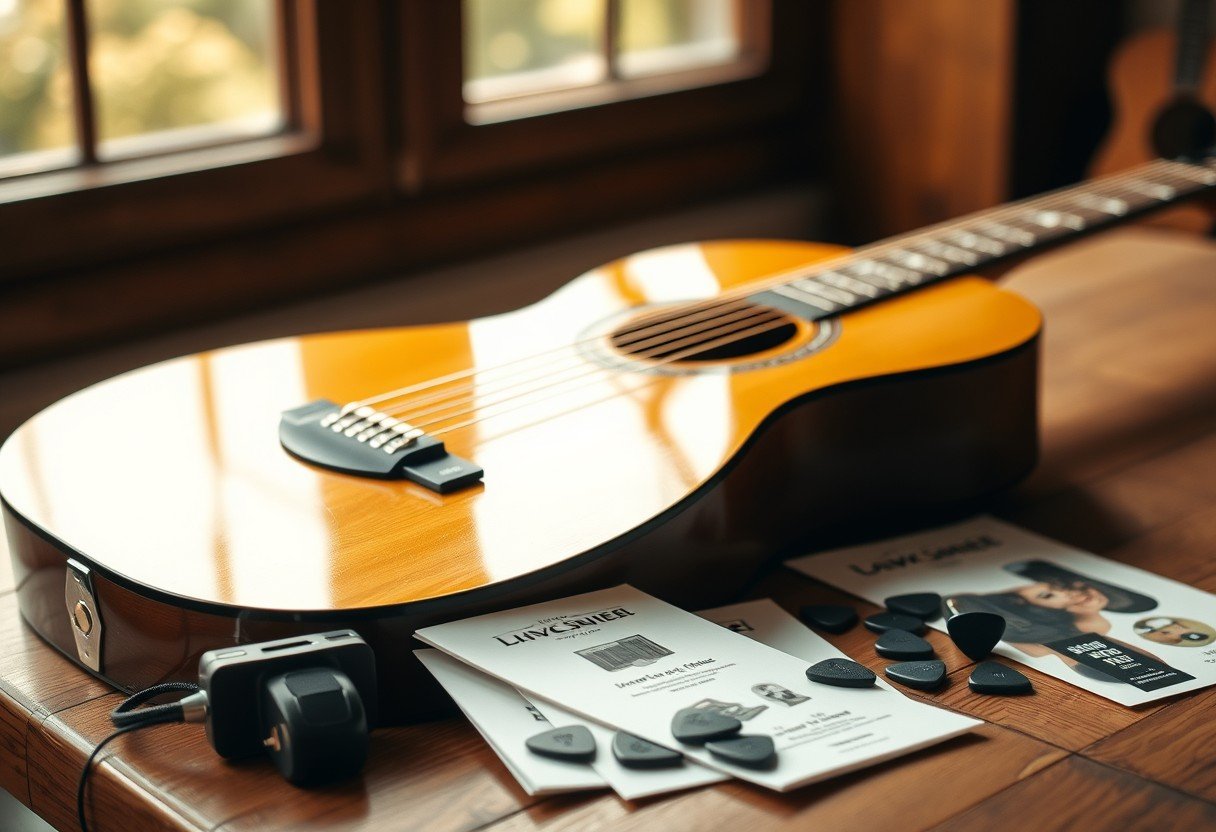
To get started, you’ll need a selection of guitar picks. These small pieces of plastic come in different shapes, sizes, and thicknesses, which can greatly affect your tone and playing style. Experimenting with various picks can help you find one that feels comfortable and produces the sound you desire.
Guitar Tuner
Guitarists know that staying in tune is crucial for a satisfying playing experience. A reliable guitar tuner helps you achieve precise tuning of your guitar, whether you choose a clip-on, pedal, or app-based tuner. Investing in one will save you time and ensure your sound is always spot on!
For instance, using a clip-on tuner will allow you to tune your guitar easily, even in noisy environments. This device picks up the vibrations of your guitar and shows you if you are flat or sharp, making it an indispensable tool for any guitarist.
Capos and Slides
Tuner accessories like capos and slides are also great additions to your toolkit. A capo clamps down on the strings at a particular fret, allowing you to change keys without altering finger positions. Slides, on the other hand, provide a unique, smooth sound that can add character to your playing.
Understanding how to use a capo can open up a myriad of possibilities. It enables you to experiment with different voicings and song arrangements, making your acoustic guitar sound more dynamic while keeping your fingers easy and comfortable.
Gig Bags and Cases
Accessories such as gig bags and cases are vital for protecting your instrument. Whether you are traveling to jam sessions or storing your guitar at home, these carriers ensure your guitar stays safe from damage and the elements.
Guitar cases come in both hard and soft varieties, providing different levels of protection. A hard case offers the best security, while a gig bag is lighter and easier to carry. Choosing the right case can safeguard your investment while allowing you the freedom to transport your guitar with ease.
Maintenance Kits
The importance of a maintenance kit cannot be understated. These kits usually contain items like string winder, cutter, microfiber cloth, and fretboard cleaner that help keep your guitar in optimal playing condition.
Another vital element of caring for your guitar is to regularly check and replace old strings. A maintenance kit allows you to change strings easily and keeps your guitar looking and sounding fantastic. Plus, taking care of your guitar properly will extend its lifespan, making your investment worthwhile.
Learning to Play
Many new players often feel daunted by the idea of learning to play an acoustic guitar. However, it’s important to remember that everyone starts somewhere. I recommend checking out some Beginner Acoustic Guitars to find a suitable instrument that fits your style and budget. With the right tools and mindset, you can begin on a rewarding journey in learning music.
Tips for Absolute Beginners
Any beginner should focus on the fundamentals when starting their acoustic guitar journey. Here are a few tips to guide you:
- Practice regularly to build muscle memory.
- Start with simple chords to ease your way into playing.
- Listen to music to develop your ear.
- Have patience with yourself; progress takes time.
Any progress, no matter how small, is a step in the right direction.
Online Resources and Tutorials
Learning guitar has never been easier thanks to a plethora of online resources. You can find various platforms that offer step-by-step tutorials, often designed for beginners. These resources can include YouTube channels, music blogs, and dedicated websites that provide instructional videos and tips for mastering your instrument.
Recommended Books and Apps
For those who prefer a structured approach, numerous books and apps offer guided lessons. Many of these resources are tailored for beginners and cover everything from basic strumming patterns to music theory. By incorporating reading and interactive learning through apps, you can enhance your understanding and skills at your own pace.
Finding a Teacher or Classes
Any aspiring guitarist may want to consider taking lessons from a professional. Finding a teacher can provide personalized feedback and structure that can greatly enhance your learning experience. Local music schools and community centers often offer group classes that can also be a great way to connect with fellow learners.
Practice Techniques
Finding effective practice techniques is critical to your musical growth. Set aside a consistent time each day to hone your skills, focusing on both technical exercises and playing songs you enjoy. This not only keeps practice enjoyable but also reinforces your commitment to improvement.
Understanding your learning style can vastly improve your practice sessions, whether you prefer visual aids, auditory lessons, or hands-on teaching methods. Embrace the journey—your dedication will set the tone for your progress ahead.
Common Challenges for Beginner Guitarists
Once again, as I reflect on the journey of learning guitar, I recognize several common challenges that beginner guitarists face. Navigating these obstacles is necessary to ensure a smooth transition into the world of guitar playing and to keep your passion alive.
Finger Pain and Calluses
Beginner guitarists often experience finger pain due to the pressure applied on the strings. While this discomfort is a normal part of the early learning stage, it’s crucial to develop calluses on your fingertips through regular practice. Over time, these toughened areas will make playing easier and more enjoyable.
Learning Chords and Transitions
On your journey to mastering the guitar, you’ll find that learning chords and making smooth transitions between them is necessary. This skill takes time and patience, but with dedication, you will see progress and begin to play your favorite songs.
A common frustration for many is the inability to switch between chords swiftly. I remember struggling to move from a G to a C chord without breaking the rhythm. I recommend practicing chords in groups, focusing on transitions between just two or three before adding more. This will help build muscle memory and improve your overall speed.
Staying Motivated
Any beginner guitarist may struggle with staying motivated during the learning process. It’s easy to feel discouraged when progress seems slow, but finding ways to keep your enthusiasm alive is key to your development.
Motivated individuals often set small, achievable goals for themselves. By celebrating these victories, even if they seem minor, I find that it boosts my confidence. Additionally, learning songs that you love can keep you excited about practicing and help you appreciate your progress over time.
Overcoming Frustration
Learning an instrument often leads to frustration, particularly when hitting those seemingly impossible barriers. It’s important to acknowledge these feelings instead of letting them derail your progress.
Chords can be challenging, especially when you feel stuck on a specific progression. I’ve found that taking breaks and reapproaching the problem later can offer a fresh perspective. Do not forget, each struggle is just another step towards becoming a more proficient guitarist, and with time, you’ll find your rhythm.
To wrap up
Ultimately, when choosing an acoustic guitar as a beginner, I recommend considering factors like playability, sound quality, and your budget. You’ll want a guitar that feels comfortable and inspires you to practice. Brands like Yamaha and Fender offer excellent options, while also exploring local shops for used instruments can yield great finds. Note, the right guitar can fuel your passion for music, so take your time, do your research, and choose one that resonates with you the most.